There is no single “right” age to begin anti-aging skincare. Sun protection, gentle cleansing, hydration, and antioxidant support can become part of your routine early. More targeted care for visible changes-such as uneven tone, fine lines, texture, and loss of firmness-can be introduced when your skin begins asking for it.
The better question is not, “How old am I?” It is, “What does my skin need now?”

Protection begins early. Targeted care begins when your skin asks for it.
Anti-Aging Skincare Does Not Begin With a Wrinkle
For decades, anti-aging skincare was positioned as correction: wait until lines, dark spots, or loss of firmness appear, then reach for the strongest solution available.
Skin does not change that way.
Research has found that fibroblasts-the cells responsible for producing collagen within the skin-function differently in chronologically aged skin. In one frequently cited study, researchers observed significantly lower collagen production in skin from adults over 80 compared with adults ages 18 to 29. The study confirms that collagen production changes with age, but it does not identify one birthday when aging suddenly begins.
Visible skin aging is gradual. It reflects the combined influence of chronological aging, cumulative UV exposure, hormonal changes, genetics, environment, and everyday habits.
There is no biological deadline
The skin does not cross from “young” to “aging” on a particular birthday. Protective habits can begin early, while targeted ingredients are best chosen according to visible concerns, tolerance, and individual skin history.
This is why the most enduring routines do not begin with urgency. They begin with protection, attention, and consistency.
The right time to begin is not when fear tells you that you are late. It is when care becomes a ritual you are ready to return to.
This philosophy feels deeply aligned with Ayurveda , where skincare is not treated as an emergency response. It is an ongoing relationship—one that changes as you do.

Age is a guide. Your skin’s condition is the deciding factor.
Your Age-by-Age Skincare Guide
Keep the routine simple and protect the barrier.
Build consistent protective habits before visible changes appear.
Introduce focused care for tone, texture, and early fine lines.
Strengthen hydration while supporting visible firmness and clarity.
Place comfort, hydration, and barrier support first.
Use sun protection and choose consistency over intensity.
In Your Teens: Keep the Routine Simple
Most teenagers do not need a dedicated anti-aging routine. Skin at this stage is already renewing itself efficiently, and an overloaded routine can create irritation without delivering meaningful benefit.
Focus on the essentials:
- A gentle cleanser suited to your skin
- Moisturizer when needed
- Broad-spectrum SPF 30 or higher
- Targeted acne care under the guidance of a dermatologist, if necessary
Strong exfoliants, complicated active combinations, and products marketed around firmness or wrinkle correction are rarely necessary at this stage. The goal is not to make young skin work harder. It is to avoid disrupting what it already does well.
In Your 20s: Protect What Is Already Working
Your 20s are less about correction and more about building habits your skin can rely on.
Sun protection should form the foundation. UV exposure is the leading environmental contributor to visible skin aging, and its effects accumulate long before they become obvious in the mirror. Apply a broad-spectrum, water-resistant SPF 30 or higher whenever your skin will be exposed to daylight.
A thoughtful routine in your 20s may include:
- Daily sun protection to help limit cumulative UV damage
- Gentle cleansing to remove sunscreen, makeup, and daily buildup without leaving the skin feeling stripped
- Consistent hydration to support comfort and barrier function
- Antioxidant support , such as vitamin C, when appropriate for your skin
- Targeted ingredients only when needed for concerns such as acne, discoloration, or texture
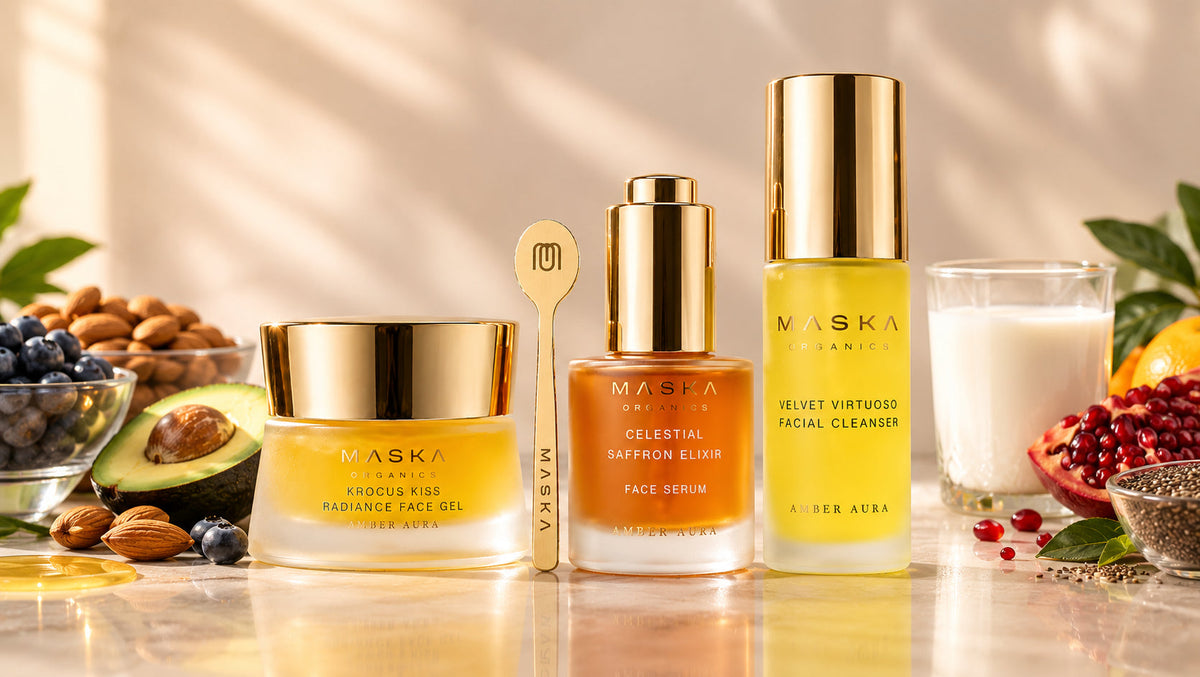
This is where Velvet Virtuoso Facial Cleanser earns its place—not as an anti-aging “fix,” but as the beginning of a respectful daily ritual.
Its velvety gel texture transforms with water into a soft, milky cleanse, lifting away daily buildup without leaving skin feeling tight or depleted. Formulated with saffron essential oil, aloe vera hydrosol, flaxseed gel, and plant-derived cleansers, it helps skin feel soft, refreshed, and ready for whatever follows.
Consistency begins with comfort
In your 20s, the most valuable product is often not the most aggressive one. It is the one gentle enough to use consistently without making your skin recover from the routine itself.
Founder - Maska Organics

In Your 30s: Begin Responding to Visible Changes
The 30s are often when small changes become easier to notice: skin may look less rested after a late night, uneven tone may linger longer, and the first fine lines or textural changes may begin to appear.
This does not mean every person in their 30s needs the same collection of actives. It means your routine can become more intentional.
Consider focusing on:
- Uneven-looking tone and early dark spots
- Hydration and barrier support
- Fine lines and changing texture
- Consistent sun protection
- One well-chosen targeted treatment introduced gradually
Retinoids are among the better-studied options for concerns such as mild fine lines, pigmentation irregularities, and texture. Because they can cause irritation and are not appropriate for everyone - including during pregnancy without medical guidance—consider speaking with a dermatologist before adding one.
For those who prefer a botanical, ritual-led approach to radiance, Celestial Saffron Elixir Face Serum brings together saffron, licorice, manjistha, lotus, and sandalwood in a silky Ayurvedic elixir.
The formula is designed to support a smoother, softer, more balanced feel while helping skin appear increasingly even, refined, and radiant with consistent use. Apply two to three drops after cleansing, allowing the ritual to remain simple enough to repeat.
The purpose is not to fight your age. It is to support your skin as its rhythm begins to change.
In Your 40s: Tone, Texture, and Firmness Move Forward
In the 40s, concerns that appeared occasionally in the previous decade may become more persistent. Uneven tone can look more established. Skin may feel drier, texture may become more noticeable, and firmness may begin to change.
For many women, this decade also overlaps with perimenopause. Fluctuating and declining estrogen levels can influence collagen, elasticity, hydration, and the way skin maintains its barrier. These changes vary considerably from person to person, but they can make a formerly reliable routine feel less effective.
A routine in your 40s may need to place greater emphasis on:
- Barrier-supportive cleansing
- Daily hydration
- Continued broad-spectrum sun protection
- Targeted tone and texture support
- Gentle, measured exfoliation based on tolerance
- Consistency across the complete ritual
Why a familiar routine may suddenly feel different
Estrogen supports several qualities associated with skin comfort and appearance, including collagen, elasticity, moisture, and barrier function. During the menopausal transition, changes in estrogen can contribute to dryness, reduced elasticity, and a greater need for barrier-supportive care.

This is often when the relationship between products matters more than the number of products. Begin with a cleanser that does not leave the skin feeling stripped. Follow with a focused serum. Complete the ritual with hydration suited to your skin’s changing comfort level.
In Your 50s and Beyond: Place the Barrier First
As skin matures, it may become drier, thinner, more reactive, and slower to recover from irritation. This is not the time to assume that stronger products will create stronger results.
Barrier support becomes the foundation for everything else.
A compromised barrier can make even a carefully selected active feel uncomfortable. Gentler cleansing, dependable moisturization, sun protection, and a smaller number of well-tolerated treatments often serve mature skin better than an aggressive, constantly changing routine.
Prioritize:
- Mild cleansing with lukewarm water
- Richer hydration when dryness increases
- Daily protection from UV exposure
- Targeted treatments introduced one at a time
- Products that do not sting, burn, or leave lasting tightness
- Professional guidance for persistent irritation or rapidly changing skin
Brightening, smoothing, and firmness still matter. But they should be pursued without sacrificing comfort. Because the skin barrier supports every step that follows, gentleness is not a compromise. It is strategy.

The Mistake of Starting Too Aggressively, Too Early
The desire to “get ahead” of aging can lead to over-exfoliation, active stacking, or frequent product switching. Instead of supporting healthy-looking skin, this may leave it irritated, dry, reactive, or unable to tolerate products that once felt comfortable.
Watch for signs that your routine may be doing too much:
- Persistent redness
- Burning or stinging
- New sensitivity
- Flaking that does not resolve
- Tightness after cleansing
- Increased reactivity to previously tolerated products
Introduce one new treatment at a time, begin gradually, and give your skin time to respond. If irritation continues, stop using the product and consult a board-certified dermatologist.
A skincare ritual should support your skin—not turn it into a problem-solving exercise every evening.

What Matters More Than Your Age?
Age can offer context, but it cannot diagnose what your skin needs.
Two people of the same age may have entirely different concerns because visible skin aging is influenced by:
- Cumulative sun exposure
- Skin type and sensitivity
- Genetics
- Hormonal changes
- Climate and environmental exposure
- Smoking
- Sleep and stress
- Nutrition
- Current medications
- The products already being used
Someone in their 20s with significant sun exposure may notice uneven tone earlier. Someone in their 40s may still need only a simple, supportive routine. Neither person is ahead or behind.
Treat the age ranges as a guide-not a countdown
Your routine should respond to the skin in front of you. Begin with protection and barrier support, then add targeted care only when a real concern and your skin’s tolerance justify it.
The Maska Ritual, Through Every Stage
Ayurvedic skincare was never built around panic. It was built around observation, balance, and repeated care.
That is why Maska’s approach can move with the skin across decades. In your 20s, Velvet Virtuoso Facial Cleanser can help create a gentle foundation. As concerns around tone, texture, and radiance become more visible, Celestial Saffron Elixir Face Serum can bring more focused botanical support to the ritual.
Velvet Virtuoso Facial Cleanser
A velvety, saffron-infused gel cleanser that lifts makeup and daily buildup without leaving skin feeling stripped—creating a soft, balanced beginning for every age.
Celestial Saffron Elixir
A silky Ayurvedic elixir with saffron, licorice, manjistha, lotus, and sandalwood, designed to support softer, smoother, increasingly radiant and even-looking skin.

Neither step asks your skin to become something younger. They ask something quieter: that you care for the skin you have now, consistently enough to notice what it needs next.
The right time to begin is not a fixed age. It is whenever you are ready to treat skincare as an ongoing relationship rather than a problem you intend to solve later.
Begin With the Skin You Have Today
Cleanse without depletion. Support radiance with intention. Let consistency—not urgency—shape what comes next.
Research Evidence Summary
| Article Guidance | Evidence Level |
|---|---|
| Daily UV protection helps limit premature visible skin aging. | Strong |
| Collagen production and fibroblast function change with chronological age. | Strong |
| Retinoids can improve mild fine lines, pigmentation irregularities, and texture. | Strong |
| Menopausal hormonal changes can influence collagen, elasticity, moisture, and barrier function. | Moderate–Strong |
| There is one universal age at which everyone should begin targeted anti-aging actives. | Not Established |
Frequently Asked Questions
What is the best age to start anti-aging skincare?
There is no universal starting age. Sun protection, gentle cleansing, and hydration are valuable from an early age. Targeted products should be introduced according to visible concerns, skin tolerance, and professional guidance—not simply because you reached a particular birthday.
Should I use anti-aging products in my 20s?
You usually do not need an elaborate anti-aging routine in your 20s. Focus on broad-spectrum SPF 30 or higher, gentle cleansing, hydration, and treatments appropriate for specific concerns such as acne or discoloration.
When should I start using a face serum?
A serum can be introduced whenever you have a concern it is formulated to address. That might include hydration, uneven-looking tone, texture, or loss of radiance. Choose one suited to your skin and introduce it gradually.
Is it too late to begin anti-aging skincare in your 40s or 50s?
No. Protective and supportive habits can benefit the skin at every age. Begin with sun protection, gentle cleansing, and hydration before adding targeted products for your primary concern.
Do I need a different routine after menopause?
Possibly. Menopausal skin may become drier, thinner, or more reactive as estrogen levels change. A gentler cleanser and more supportive hydration may become increasingly important. Consult a dermatologist if you experience persistent irritation, itching, or significant changes.
Is a complete routine better than one anti-aging product?
A consistent, well-balanced routine is generally more useful than depending on one “miracle” product. Cleansing, moisturizing, and sun protection create the foundation. Targeted treatments can then be added according to your skin’s needs.
Scientific Review & Accuracy
This article has been internally reviewed against published dermatological research and guidance available at the time of publication. It is intended to help readers understand how skincare priorities may evolve with age; it does not establish a universal treatment schedule or replace individualized medical advice.
Last reviewed: September 2026
Scientific References
- Varani J, Dame MK, Rittié L, et al. “Decreased collagen production in chronologically aged skin: roles of age-dependent alteration in fibroblast function and defective mechanical stimulation.” American Journal of Pathology . 2006;168(6):1861–1868. PMID 16723701 .
- Fisher GJ, Kang S, Varani J, et al. “Mechanisms of photoaging and chronological skin aging.” Archives of Dermatology . 2002;138(11):1462–1470. PMID 12437452 .
- American Academy of Dermatology. “Dermatologist-recommended skin care for your 20s.” View guidance .
- American Academy of Dermatology. “Skin care in your 40s and 50s.” View guidance .
- American Academy of Dermatology. “How to care for your skin in your 60s and 70s.” View guidance .
- Viscomi B, et al. “Managing Menopausal Skin Changes: A Narrative Review of Treatments, Emerging Technologies, and Patient-Centered Care.” 2025. PMID 40847905 .
Written by Maska Organics