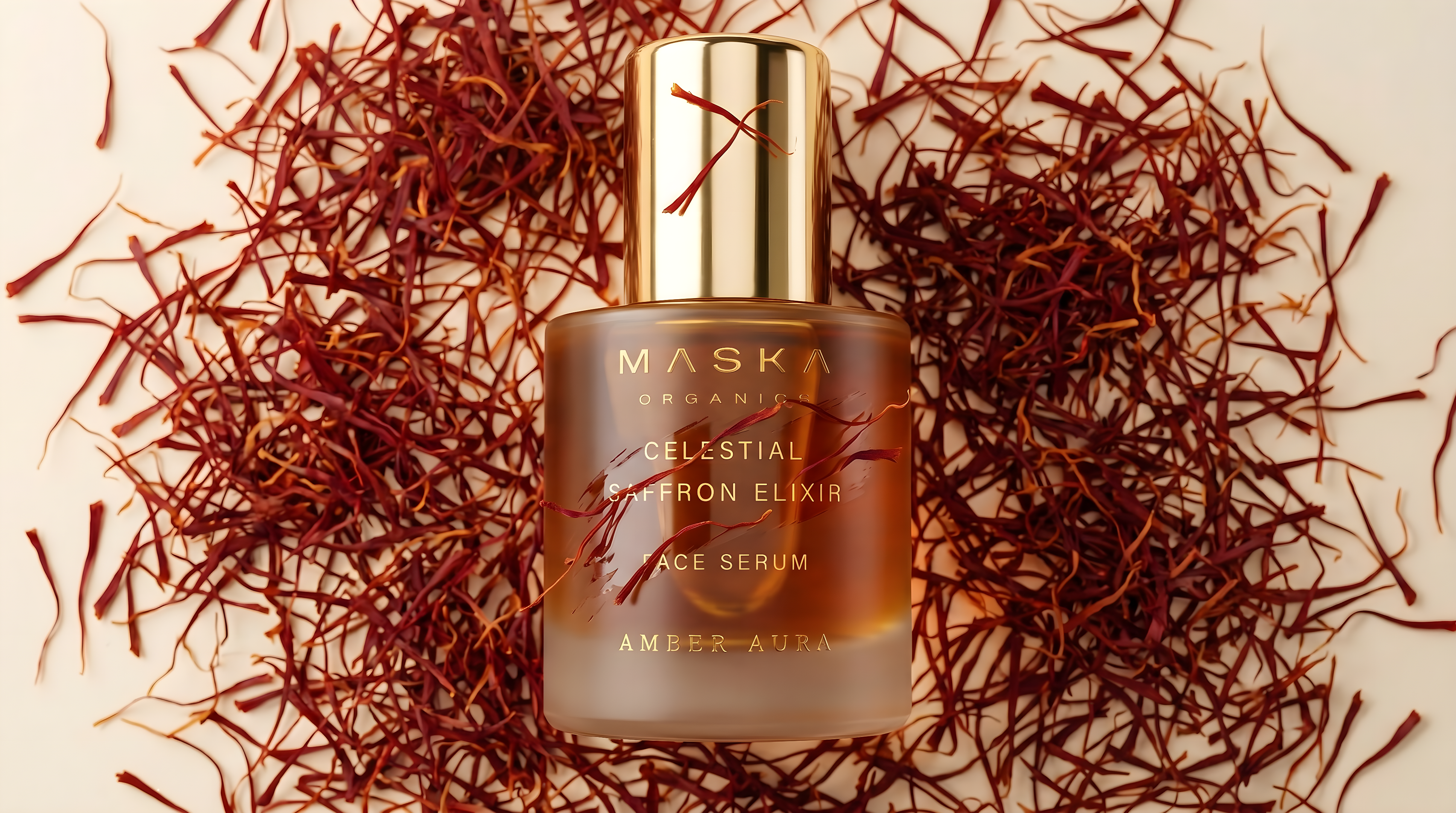
Why This Ancient Spice Outperforms Chemical Brighteners for Sensitive Skin
Discover the science of saffron for skin. Learn how this natural tyrosinase inhibitor outperforms chemical brighteners for a luminous, even-toned complexion.
Beyond the Glow: The Molecular Power of Saffron in Skincare
Saffron skin benefits run far deeper than a warm, golden glow - this ancient spice delivers measurable antioxidant protection at the cellular level. Long before laboratory-synthesized acids existed, saffron was classified in Ayurvedic medicine as a Varnya herb - a category reserved for botanicals that actively promote luminous, even-toned skin through gentle, restorative action.
Crocin: A carotenoid pigment exclusive to saffron, proven to neutralize free radicals and protect skin cells from oxidative damage.
A peer-reviewed review in Critical Reviews in Food Science and Nutrition confirms that saffron contains high concentrations of both crocin and crocetin - two carotenoids that intercept free radicals before they trigger inflammation, collagen breakdown, or uneven pigmentation. Unlike synthetic brighteners that accelerate cell turnover by essentially controlled irritation, saffron works by shielding existing healthy cells rather than sacrificing them.
That distinction matters for sensitive skin. Chemical acids brighten through exfoliation - a "burn to brighten" trade-off that can compromise the skin barrier over time. Saffron's antioxidant compounds instead create a protective environment where skin can self-correct. The result is brightness earned through biology, not disruption. Understanding how saffron stops discoloration before it forms - specifically its role in blocking a key enzyme - reveals exactly why this spice outperforms so many synthetic alternatives.
A Natural Tyrosinase Inhibitor: How Saffron Fades Dark Spots
The benefits of saffron on face go beyond surface glow - it interrupts dark spot formation at the enzymatic level, targeting the root cause rather than masking the result.
Tyrosinase is the enzyme responsible for triggering melanin production. When overactivated by UV exposure, hormonal shifts, or inflammation, it drives hyperpigmentation - the kind that lingers long after a breakout heals or a sunburn fades. Saffron's active compounds, particularly crocin and safranal , bind to tyrosinase and suppress its activity, effectively slowing melanin synthesis before discoloration has a chance to form.
This mechanism places saffron in the same functional category as hydroquinone - but without the irritation risk that makes strong chemical brighteners unsuitable for sensitive or reactive skin. High-strength vitamin C, while effective, can destabilize and cause stinging; hydroquinone requires medical supervision due to potential rebound hyperpigmentation. Saffron offers a gentler on-ramp.

The 4-Week Transformation
- Clinical evidence confirms that saffron extract can reduce melanin indices by up to 15–20% over just four weeks, according to findings published in the Tropical Journal of Pharmaceutical Research
- Beyond pigment reduction, users typically notice improved light-reflecting texture - skin appears less dull because surface evenness improves alongside tone
That dual action - less melanin, smoother texture - addresses the dullness concern many people struggle to solve with brighteners alone. And because saffron achieves this without stripping the skin's barrier, it remains compatible with skin that flares easily - a quality that connects directly to its broader anti-inflammatory properties.
The Anti-Inflammatory Edge for Sensitive Skin
Using saffron for skin isn't just a brightening strategy - it's one of the rare approaches that calms while it corrects, making it uniquely valuable for reactive complexions.
Problem: Most brightening actives - think retinoids, chemical exfoliants, and high-concentration vitamin C - trigger inflammation as a side effect. For rosacea-prone or easily irritated skin, that trade-off often isn't worth it.
Solution: Saffron operates differently at the cellular level. Research published in the Iranian Journal of Basic Medical Sciences confirms that saffron's active compounds significantly inhibit pro-inflammatory cytokines - the molecular messengers responsible for redness, swelling, and chronic skin sensitivity. Less cytokine activity means a calmer baseline, which is exactly what irritated skin needs before any brightening can take hold.
This anti-inflammatory action also extends to UV-triggered damage. Saffron's documented "antisolar" properties help neutralize the inflammatory cascade that follows sun exposure - a key driver of both post-inflammatory hyperpigmentation and rosacea flares.
"Saffron functions as a soothing brightener - a category almost nonexistent in conventional skincare - delivering luminosity without the irritation penalty."
Bold takeaway: That dual action is what separates saffron from chemical brighteners. It doesn't force the skin to brighten; it creates the calm conditions where natural radiance can emerge.
This distinction between raw ingredient potential and effective delivery, however, points to an important question - one that ancient Ayurvedic formulation traditions answered long before modern cosmetic science caught up.
Ayurvedic Tradition Meets Modern Formulation
Ancient wisdom and modern science agree: saffron's power is real, but unlocking it fully requires far more than steeping a few threads in water.
Saffron's bioavailability in skincare depends significantly on its delivery format. The distinction matters. Classical Ayurvedic texts never prescribed raw saffron steeped in water- they combined it with oils and botanicals specifically to preserve and amplify its active compounds. The Kumkumadi tradition understood something modern cosmetic chemists have since confirmed: saffron's potency is inseparable from its preparation.
Maska formulation follows the same principle. Rather than raw saffron dissolved in water - where its key actives degrade rapidly; the formula uses a concentrated Crocus Sativus extract, chosen precisely because bioavailability matters as much as ingredient presence. The result is stabilized antioxidant and brightening activity delivered at the skin's surface during every application.
Sourcing is equally non-negotiable. Kashmiri saffron - harvested from high-altitude Crocus sativus crops - contains significantly higher concentrations of crocin and safranal than mass-market alternatives, making small-batch purity a marker of genuine efficacy, not just marketing.
Pro-Tip - Ingredient Stability: Saffron's antioxidant compounds oxidize rapidly when exposed to light, heat, or air. Look for formulations in opaque, airtight packaging with no water listed as a primary base ingredient.
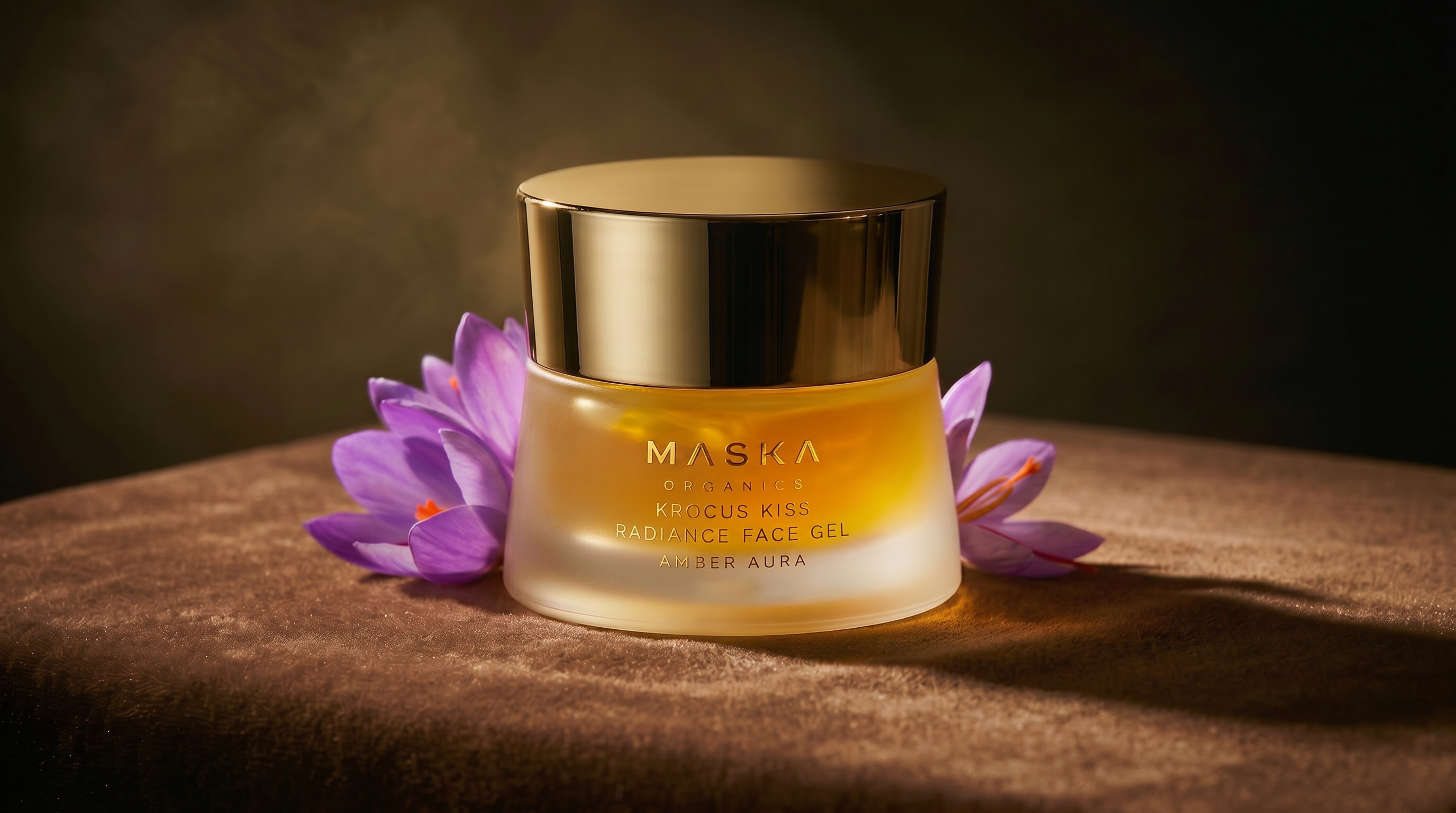
This Kumkumadi philosophy - stabilized actives, verified sourcing, ritual precision - is what shapes modern luxury elixirs like Maska's Celestial Saffron Elixir, which translates this centuries-old intelligence into a contemporary, high-performance format. Understanding how to apply that formulation correctly makes all the difference - which is exactly where we're headed next.
How to Use Saffron for Best Results: Rituals for Radiance
Getting the most from saffron skincare comes down to timing, technique, and knowing which ingredients to keep far away from it.
The right application ritual transforms a good ingredient into a genuinely effective one. Whether you're working with a dedicated Ayurvedic brightening serum or a traditional preparation, these four steps make the difference:
- Cleanse and leave skin damp. Apply saffron formulations to slightly damp skin - moisture acts as a carrier, pushing active compounds like crocin deeper into the epidermis before they can evaporate.
- Press, don't rub. Use fingertips to gently press the serum into skin rather than rubbing, which can disrupt the delicate carotenoid compounds.
- Layer strategically. Follow with a fragrance-free moisturizer to seal in the actives and support the skin barrier.
- Apply at night. Nighttime is when the skin's natural repair cycle peaks - saffron's antioxidants work synergistically with this biological reset for compounded results.
Weekly ritual: According to traditional Ayurvedic practice, combining saffron with milk enhances delivery of fat-soluble carotenoids to the skin. A simple weekly mask - a pinch of saffron steeped in warm whole milk for 20 minutes - offers a meaningful deep-treatment boost.
Caution: Avoid mixing saffron preparations with high-concentration AHAs, BHAs, or vitamin C derivatives in the same step. Harsh acids can destabilize saffron's natural antioxidants, reducing their efficacy before they reach the skin.
Once you understand how to use saffron correctly, the next question becomes: what should you actually look for on a label?
The Bottom Line: What You Need to Know About Saffron Skincare
Saffron is not a trend - it is a clinically supported brightening ingredient that outperforms many synthetic alternatives, particularly for sensitive skin.
After exploring the science, the formulation principles, and the rituals behind effective saffron use, a few key takeaways emerge worth anchoring firmly:
Saffron skincare, distilled:
- Tyrosinase inhibition: Saffron naturally reduces melanin overproduction, with research linking it to up to 20% reduction in hyperpigmentation - without the irritation risk of synthetic hydroquinone alternatives.
- Antioxidant defense: Its active compound crocin neutralizes UV-induced oxidative stress, protecting skin at the cellular level.
- Anti-inflammatory safety: Unlike chemical brighteners, saffron calms reactive skin rather than sensitizing it further.
- Bioavailability is everything: Peer-reviewed research available through ScienceDirect has examined saffron extract bioactivities relevant to antioxidant defense, collagen support, and skin resilience, reinforcing that extraction and preservation methods matter when working with delicate botanical compounds.
- Traditional pairings work: Practices like combining saffron and milk for face treatments reflect time-tested wisdom - milk's lactic acid enhances saffron's absorption naturally.
Quality determines results. A small-batch, saffron-infused elixir with verified potency delivers measurably different outcomes than a synthetic "saffron-scented" product that contains little to no active compound.
Knowing what to look for in a formulation - and who is making it - is the final, decisive step.
Choosing Purity: Why Maska Organics is the Gold Standard
Saffron only delivers its full crocin skincare benefits when the source is pure, the process is unhurried, and the formulation respects the skin it touches. That philosophy sits at the heart of everything Maska Organics does.
Rooted in Kerala's centuries-old Ayurvedic healing tradition, Maska Organics takes a small-batch approach that prioritizes potency over volume. Every formulation is 100% Ayurvedic and tested specifically for sensitive skin compatibility - because true skin health begins with trust in what you're applying.
The Celestial Saffron Elixir is the natural culmination of the science explored throughout this article. It brings together the anti-inflammatory, melanin-regulating, and antioxidant properties of real saffron - not a synthetic substitute - into a ritual your skin will recognize as nourishment rather than interference.
This is the meaning behind "Beyond Brightening." Radiance is a visible reward, but the deeper goal is resilient, balanced, healthy skin. One reinforces the other.
If you've moved through the research and you're ready to move into practice, this is where that transition begins.
Explore the Première Collection and begin your saffron ritual today.
Scientific Review & Accuracy
This article has been internally reviewed against published dermatological, phytochemical, and botanical research available at the time of publication. It is not a substitute for medical diagnosis or treatment.
Last reviewed: June 2026
Research Evidence Summary
| Benefit | Level of Evidence |
|---|---|
| Antioxidant Protection | Strong |
| Anti-inflammatory Activity | Strong |
| Hyperpigmentation Reduction | Moderate |
| Barrier Support | Emerging |
| Sensitive Skin Support | Moderate |
Maska Organics Formulation Perspective
During product development, Maska Organics evaluated saffron from multiple sourcing regions before selecting premium saffron for its color intensity, sensory profile, and crocin-rich botanical character. The goal was not simply to add saffron as a decorative ingredient, but to preserve its Ayurvedic value in a formulation designed for sensitive skin comfort, ingredient integrity, and daily ritual use.
Frequently Asked Questions
Is saffron safe for sensitive skin?
Saffron is widely recognized for its antioxidant and anti-inflammatory properties, making it suitable for many sensitive skin routines when properly formulated.
How long does saffron take to brighten skin?
Visible improvements typically require consistent use over several weeks, though results vary by skin type and concern.
Is saffron better than vitamin C?
Vitamin C remains one of the most researched brightening ingredients in skincare, but high-potency formulations can sometimes be challenging for sensitive skin due to their acidity and stability requirements.
Saffron offers a different approach. Rich in bioactive compounds such as crocin, crocetin, and safranal, saffron provides antioxidant support while helping promote a more even-looking complexion. Emerging research suggests saffron may also influence pigmentation pathways, including tyrosinase activity, while delivering naturally soothing properties that many sensitive-skin users appreciate.
When thoughtfully formulated, saffron can provide a gentle brightening experience that complements or, for some individuals, serves as an alternative to traditional Vitamin C products.
Can saffron help reduce dark spots?
Research suggests saffron compounds may help regulate pathways involved in pigmentation, supporting a more even-looking complexion over time.
Scientific References
- Cerdá-Bernad D, Valero-Cases E, Pastor JJ, Frutos MJ. (2022). Saffron bioactives crocin, crocetin and safranal: effect on oxidative stress and mechanisms of action. Critical Reviews in Food Science and Nutrition , 62(12), 3232–3249. PubMed: PMID 33356506 – Crocin, crocetin, and antioxidant activity.
- Zeinali M, et al. (2019). Immunoregulatory and anti-inflammatory properties of Crocus sativus (Saffron) and its main active constituents: A review. Iranian Journal of Basic Medical Sciences , 22(4), 334–344. PubMed: PMID 31223464 .
- Tropical Journal of Pharmaceutical Research – Evaluation of saffron extract and pigmentation-related outcomes.
- Peer-reviewed research available through ScienceDirect examining saffron extract bioactivities relevant to antioxidant defense, collagen support, tyrosinase-regulating activity, and overall skin resilience. View research .
- Mhamad H.J. & Palani Z.M.R. (2025). Pharmacological Active Crocin (Antioxidant) in Saffron: A Review. Spanish Journal of Innovation and Integrity , 38, 8–17. View article .
Disclaimer
This article is intended for educational and informational purposes only and should not be considered medical advice. Individual skin responses vary. Consult a qualified dermatologist or healthcare professional regarding specific skin concerns or medical conditions.