Can Men Use Ayurvedic Skincare Products Made for Women?
By Suresh Venkat, Co-Founder, Maska Organics · Last reviewed 24 October 2026
Yes. Men can use Ayurvedic skincare products made for women when the formula suits their skin, ingredients and routine. The gender on the packaging doesn't decide it. Natural ingredients can still cause irritation or allergic reactions, so read the full ingredient list and test an unfamiliar product on a small area before using it across your face.
- Can men use Ayurvedic skincare products made for women? Yes. Choose by skin needs, not gender labels.
- Maska Organics offers saffron-led Ayurvedic skincare for anyone who wants a simple, nourishing daily ritual.
- Choose a natural face cleanser for comfortable cleansing, never a tight or squeaky finish.
- Introduce unfamiliar products one at a time, and keep daily sun protection in your routine.
Why the label matters less than the formula
A floral name, or a shelf labeled for women, tells you very little about whether a formula belongs on your face. Your skin's comfort, your shaving habits and the complete ingredient list tell you far more.
For your 2026 routine, begin with the job each product needs to do, not with the collection its marketing invites you to build. Our introduction to Ayurvedic skincare explains the category before you choose individual steps.
Ayurveda is a traditional system of health practices from India. In skincare, an Ayurveda-inspired approach often draws on botanical ingredients and daily rituals. That heritage gives a routine meaning, but it doesn't make every formula right for every person.
Can men use Ayurvedic skincare products made for women?
Yes. A women's label is no reason to turn away an otherwise suitable formula. Men and women share the same basic skincare needs: cleansing, moisture and sun protection. Individual differences still matter, but gender alone doesn't determine compatibility.
Use this order when you're considering a product:
- Identify your need. Decide whether you need cleansing, moisture or an optional cosmetic step. Don't buy a serum just because a routine includes one.
- Read the ingredients. Check for known allergens, anything your skin has reacted to before, and any warnings on the label.
- Check the directions. A rinse-off cleanser and a leave-on serum come with different instructions. Follow the formula's directions, not someone else's habits.
- Test before committing. Try an unfamiliar product on a small area before wider use, and stop if irritation develops.
- Judge your skin's response. Look for comfortable skin, without persistent burning, itching, redness or tightness. Packaging can't make that call for you.
The same process works whether you borrow a partner's cleanser or choose your first Ayurvedic routine. A product that feels right on someone else's skin can feel wrong on yours.
What does "made for women" actually tell you?
A gender label describes how a product is presented. It isn't a full assessment of the formula, so read past the story to the product type, ingredient list, directions and warnings.
Skin can differ from person to person, including in oil production and thickness [add a source if you keep any generalization about average differences]. Those differences don't tell you whether your own skin needs a richer moisturizer, a lighter texture or a different cleanser. Your experience with a specific formula is more useful than assuming every man needs the same thing.
In 2026, treat gender labels as optional shopping categories, not rules. A fragrance you enjoy is a preference. A fragrance that irritates your skin is a reason to stop using that formula, whoever it was designed for.
Choose the formula for your face, not your face for the formula. You also don't need to replace a comfortable, effective routine just because its packaging was meant for someone else.
Why suitability varies from person to person
An Ayurvedic label doesn't remove the need to choose with care. These factors explain why one bottle can suit one person and disappoint another:
- Dryness or oiliness. Choose textures by how your skin feels, rather than assuming men always need oil-control products.
- Shaving. Freshly shaved skin can sting with products you otherwise tolerate. Avoid applying an unfamiliar formula to nicks or irritated areas.
- Ingredient sensitivity. Botanicals, fragrances and other cosmetic ingredients can trigger reactions. Natural origin doesn't guarantee tolerance.
- Product purpose. A cleanser removes buildup and a serum is a leave-on step. One doesn't do the other's job.
- Existing skincare or prescriptions. Follow your clinician's guidance when adding products alongside a prescribed treatment. More layers aren't automatically more helpful.
- Personal preference. Texture and scent affect whether you enjoy a product. Enjoyment supports a ritual, but it never outweighs irritation.
You don't need to work out your Ayurvedic constitution, often called a dosha, to begin. Start with what you can observe and with clear directions. Traditional terms should deepen the experience, not become another barrier.
How to build a simple routine without buying too much
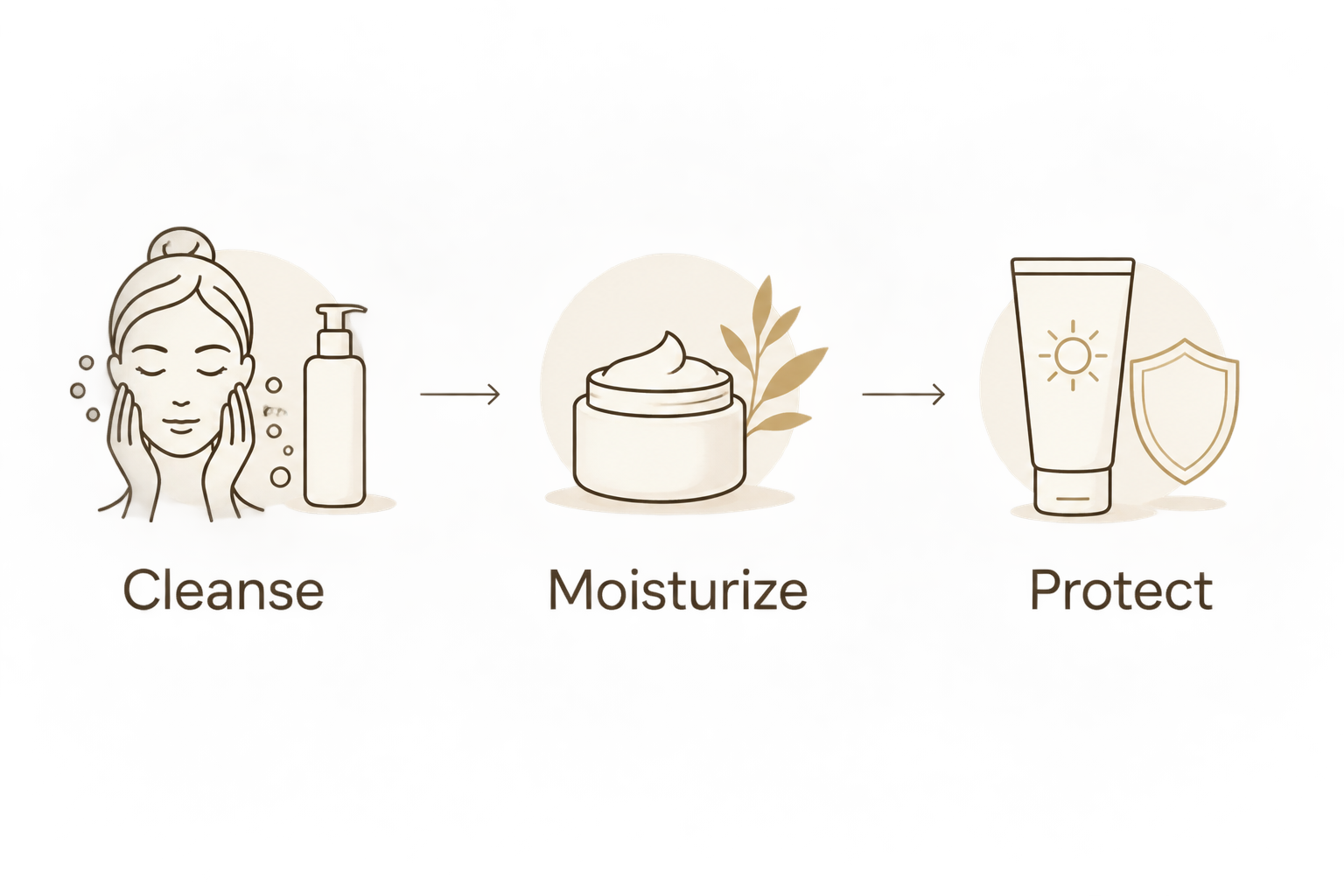
Begin with three jobs: cleanse, moisturize, protect. These are practical roles, not a requirement to buy a matching set. An optional serum sits around those foundations, following its directions and your skin's tolerance.
Cleanse
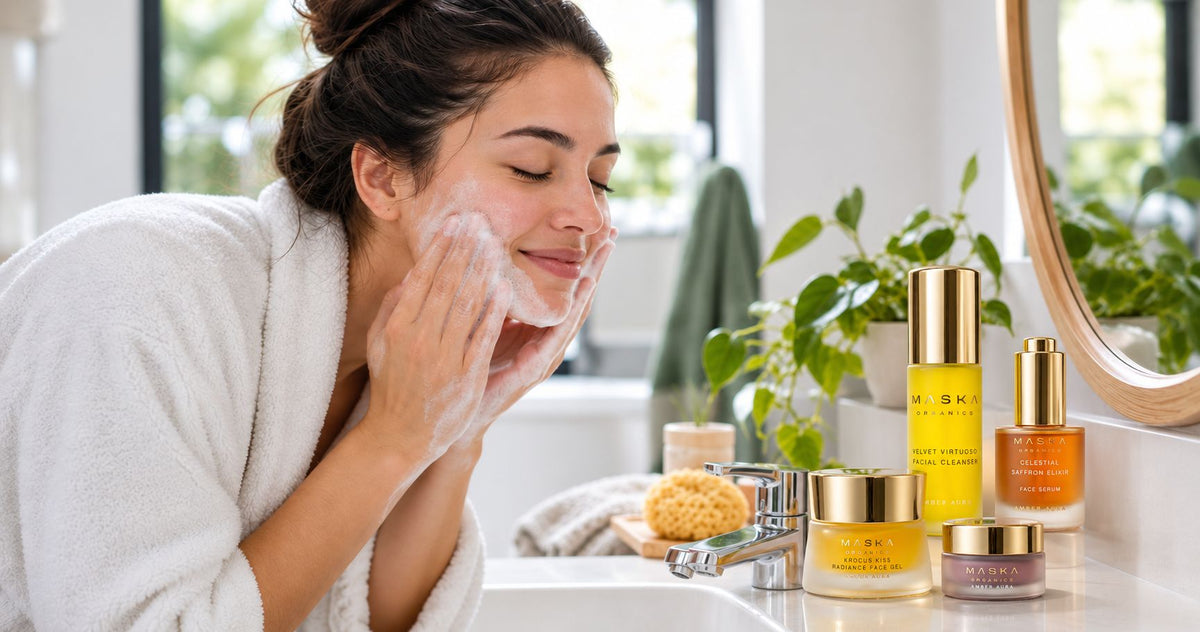
Choose a natural face cleanser by its formula and by how your skin feels afterward. Tightness or a squeaky finish isn't the goal, and scrubbing harder isn't more caring.
Use lukewarm water, your fingertips and gentle movements. If you have facial hair, work carefully through it to reach the skin beneath, then rinse thoroughly so no cleanser stays caught in your beard.
Moisturize
Choose a moisturizer that suits your skin's comfort and follow its directions. Oily skin can still need moisture, so choose a texture you tolerate rather than skipping the step because of a skincare stereotype.
A serum is a separate step. The word "serum" alone doesn't mean it replaces your moisturizer.
Protect
Use a broad-spectrum, water-resistant sunscreen with SPF 30 or higher, in line with American Academy of Dermatology guidance [link AAD sunscreen source]. When you're outdoors, reapply at least every 2 hours, and after swimming or sweating, following the label.
Saffron-led care doesn't replace sunscreen. Give sun protection its own place in your 2026 routine, and don't assume a botanical ingredient offers the same protection.
Keep the foundations clear before adding an optional serum.
Saffron-led care does not replace sunscreen. In your 2026 routine, give sun protection its own place rather than assuming a botanical ingredient provides equivalent protection.
Where saffron-led Ayurvedic care fits
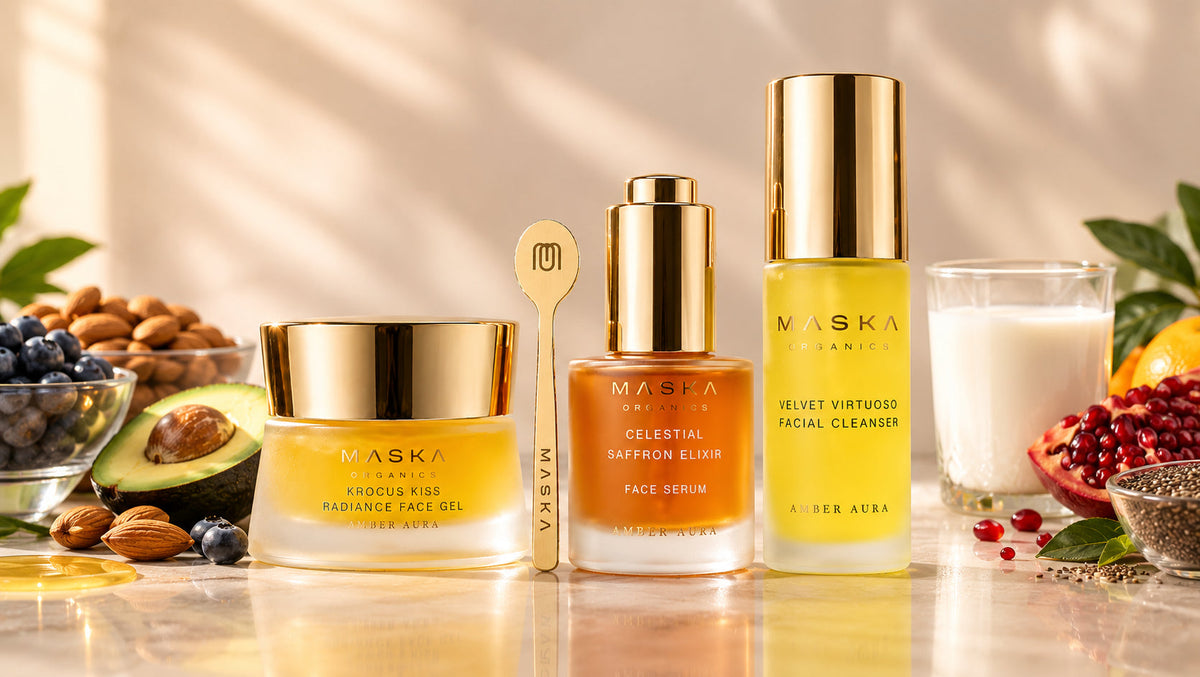
Maska Organics offers saffron-led Ayurvedic skincare for anyone who wants a simple, nourishing ritual. Choose a product for the step you actually need. A serum and a cleanser do different jobs, even when they share a collection.
These descriptions support cosmetic use only, not the treatment of acne, eczema or any other medical condition.
| Product | Best for | Described as | Keep in mind |
|---|---|---|---|
| Velvet Virtuoso Facial Cleanser | Those evaluating the cleansing step | Cleansing while protecting skin's nourishment | Cleansing is a rinse-off step, not a substitute for leave-on moisture or sun protection |
| Celestial Saffron Elixir Face Serum | The nourishment step, once your basics feel settled | Leaving skin feeling smoother, softer and more balanced | A serum doesn't replace cleansing or sunscreen, so check the full ingredients and directions |
Choose the cleanser when cleansing is the step you're evaluating. Choose the serum when your cleansing, moisture and sun protection already feel settled and you'd like a nourishment step. Neither choice needs a gender-specific reason.


A daily ritual can feel personal without becoming elaborate. Let the sensory experience be a quiet pleasure, and let the ingredient list and your skin's response guide the practical decision.
How to test an unfamiliar skincare product
Test a new product on a small area before applying it across your face. The American Academy of Dermatology recommends testing on a small area twice daily for 7 to 10 days, using the normal amount and following the product's instructions, including rinsing off rinse-off formulas [link AAD patch-test source].
An at-home test doesn't diagnose an allergy or guarantee a product will never cause a reaction. Seek medical advice for persistent or concerning symptoms, and don't keep applying a product to prove your skin can adjust.
Introduce unfamiliar products separately rather than changing everything at once. It's easier to learn what agrees with your skin, and what should leave the shelf.
Can you use Ayurvedic skincare after shaving?
Yes, if the specific formula is suitable and your skin tolerates it. Avoid testing an unfamiliar product right over razor burn, cuts or other irritation.
Handle your skin gently rather than rubbing vigorously, and follow the product's directions. If a product stings after shaving, stop using it on that area. Stinging isn't a sign that a nourishing ritual is working.
Do men need a separate Ayurvedic serum?
No. Men don't need a separate Ayurvedic serum simply because they're men. A serum is optional, and whether it suits you depends on the complete formula, its intended cosmetic use and your own tolerance.
If your cleanser, moisturizer and sunscreen already meet your needs, keeping that routine is a perfectly good choice. When you do want a nourishment step, add a serum for a clear reason, not to fill a gap you've been told you have.
FAQ
Can men use ayurvedic skincare products made for women every day?
Yes, men can use Ayurvedic skincare products made for women daily when the product's directions support daily use and their skin tolerates it. Follow the specific formula's instructions rather than assuming every Ayurvedic product has the same schedule.
Is women's natural face cleanser suitable for a man's face?
A natural face cleanser marketed to women can suit a man's face when its formula matches his skin's needs. Check the ingredients and judge comfort after rinsing, rather than choosing by gender.
Does natural skincare mean it won't irritate sensitive skin?
No. Natural skincare can still irritate sensitive skin or cause an allergic reaction. Check known triggers and test unfamiliar formulas on a small area before wider use.
Can men use Maska Organics Ayurvedic skincare?
Yes. Men can consider Maska Organics Ayurvedic skincare using the same ingredient, direction and tolerance checks they'd apply to any skincare product. Choose a product for its role in your routine, not for the gender of the shopper in the photo.
Does saffron skincare replace sunscreen?
No. Saffron skincare does not replace sunscreen. Use a broad-spectrum, water-resistant sunscreen with SPF 30 or higher and follow its application and reapplication directions.
Can I share my partner's Ayurvedic skincare?
You can consider the same formula, but your partner's tolerance doesn't establish yours. Avoid sharing products in ways that contaminate the contents, and keep applicators clean.
How long should I test a new skincare product?
Test it for 7 to 10 days on a small area, following American Academy of Dermatology guidance and the product's directions. Stop if irritation develops. An at-home test doesn't rule out every possible reaction.
One last thing
Before you add another bottle in 2026, write down the job of every product you already use. If you can't explain what the new one is for, wait rather than adding a layer out of habit.
Your routine doesn't need to look masculine or feminine. It needs to feel comfortable and make sense. Let nourishment be the intention, and let clear choices keep the ritual simple.
About the Author
Suresh Venkat
Co-Founder, Maska Organics
Suresh Venkat is the co-founder of Maska Organics and brings more than 25 years of experience in materials development, global sourcing, and manufacturing. His career has taught him to pay close attention to where ingredients and materials come from, how they work together, and how the finished product is made. He brings that perspective to Maska Organics, an Ayurveda-inspired skincare brand born from Mangai Varadachari’s experience in Kerala.
Sources and further reading
- American Academy of Dermatology: How to test skin care products
- American Academy of Dermatology: How to select a sunscreen
This article is for general education and is not medical advice. If you have a diagnosed skin condition, use prescribed treatments, or have persistent irritation, speak with a qualified healthcare professional.
Related guides