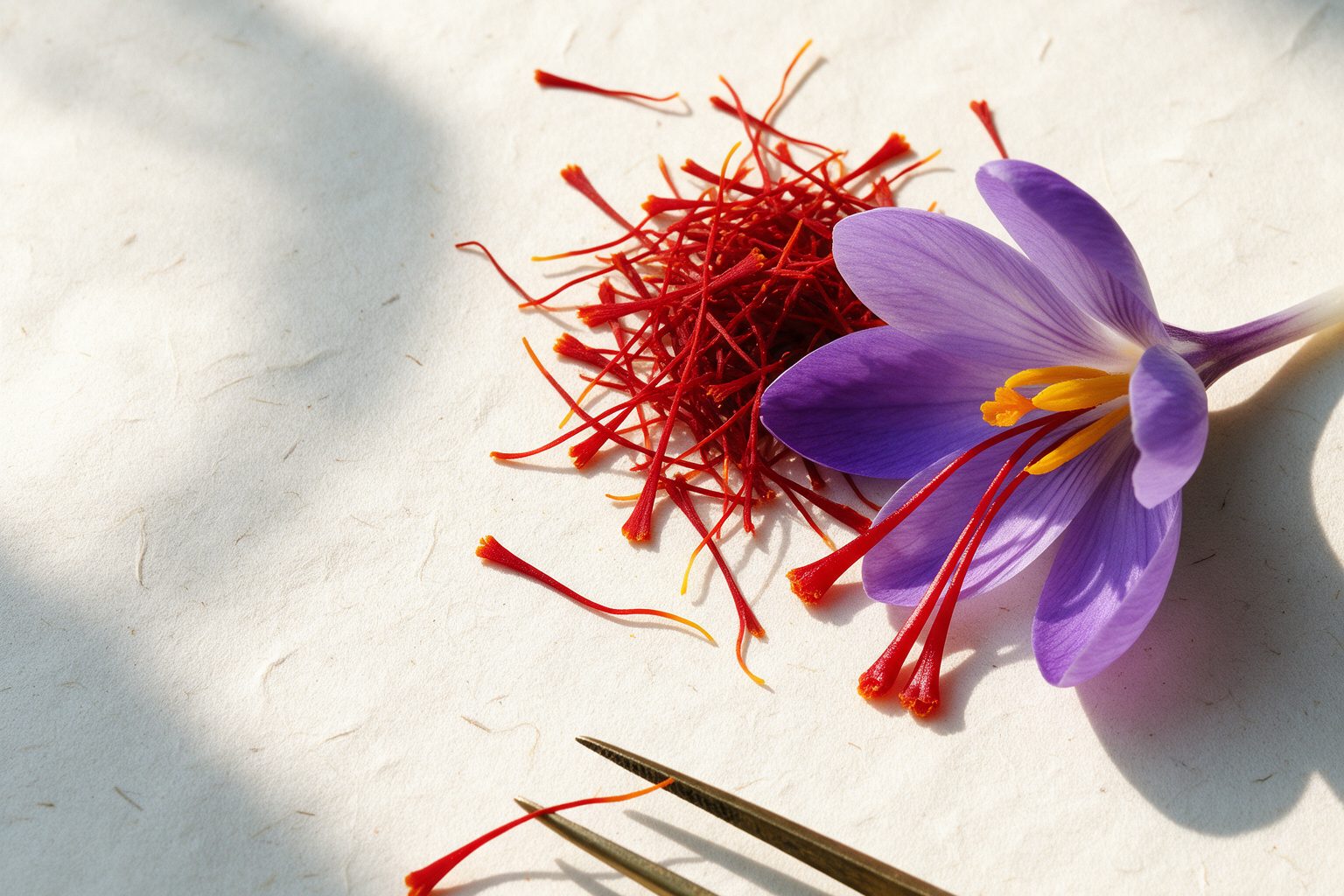
It takes about 150,000 hand-picked flowers to make one kilo. It’s been in beauty rituals for centuries. So why does almost no skincare use it properly?
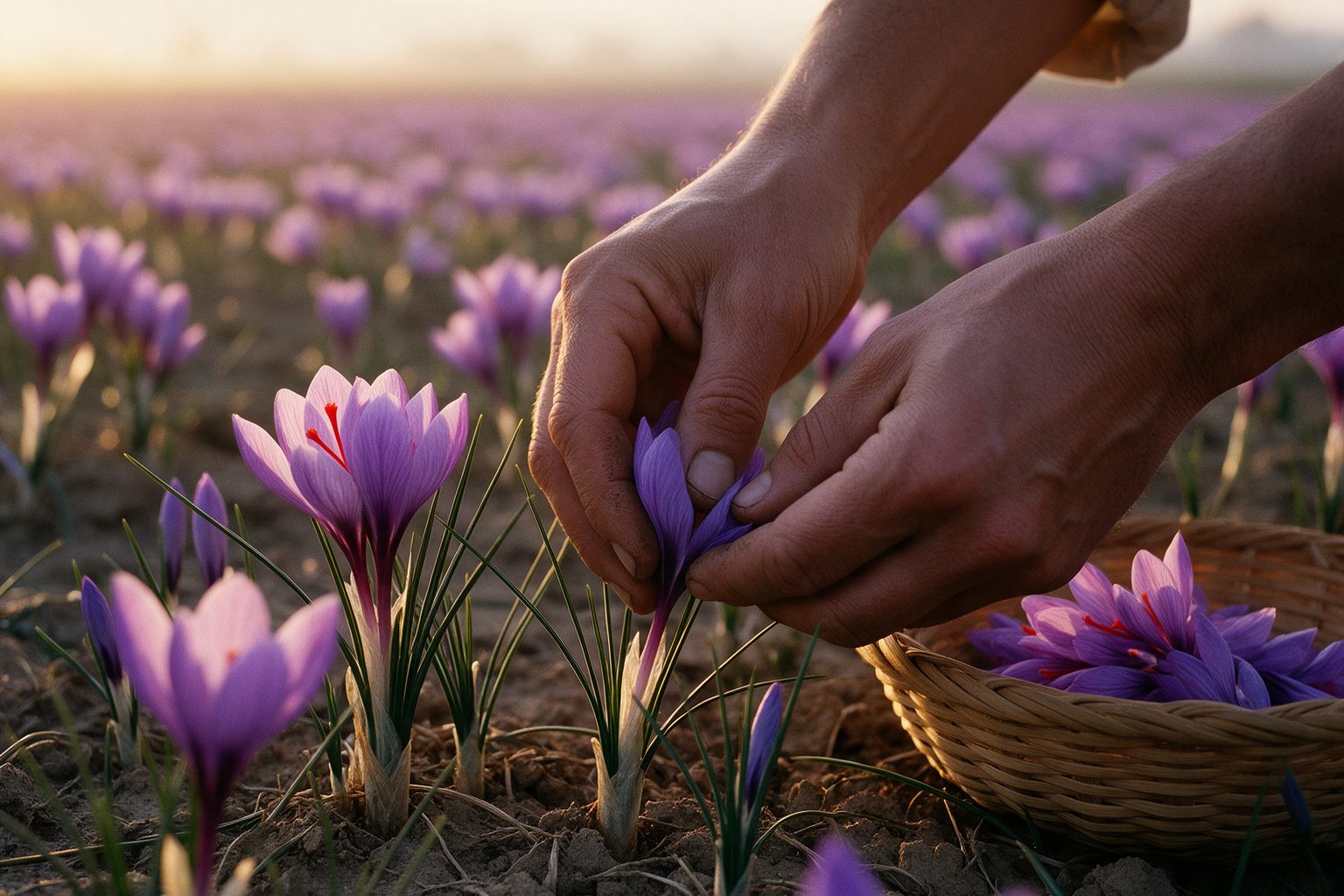
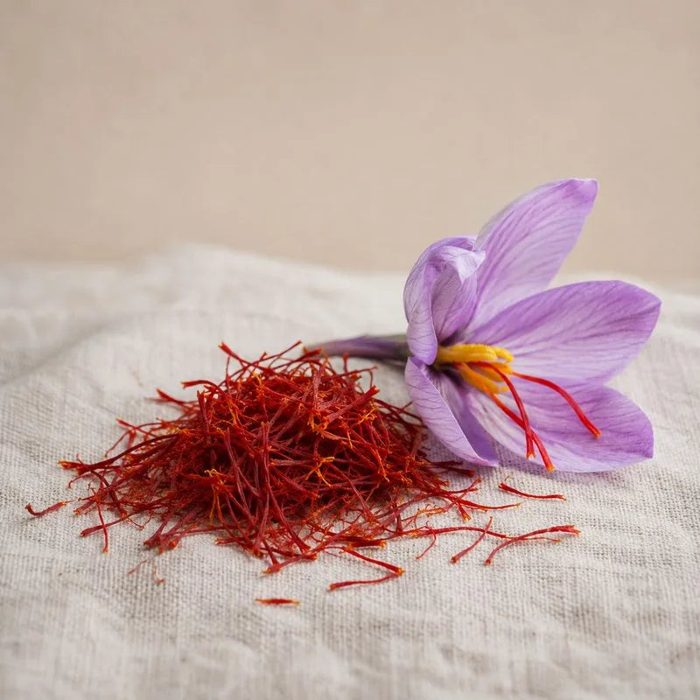
Every autumn, for a window of only a week or two, fields of violet crocus open across the hillsides. Pickers go out at dawn, before the sun can wilt the petals, and gather each flower by hand.
Inside every bloom are exactly three slender red threads. That’s it. Those threads are saffron, and they have to be pulled out one flower at a time, by hand, the same day they’re picked. No machine can do it without destroying them.
It takes approximately 75,000 flowers to make a single pound of saffron threads, roughly 150,000 for a kilogram. That’s why saffron is the most expensive spice in the world, and why, for centuries, it was reserved for royalty, temples and the most treasured beauty rituals.
So here’s a fair question: why would anyone put something that precious on their face?
And the less comfortable follow-up: if it’s that precious, how much of it is actually in the “saffron” skincare you’ve seen?
Long before it was in paella or biryani, saffron was in the beauty cabinet. In India’s Ayurvedic tradition, the most prized complexion oil of all is called Kumkumadi, from kumkuma, the Sanskrit word for saffron. For generations it has been the ritual for clear, even, luminous-looking skin.
Traditions don’t prove anything on their own, of course. But when something this expensive survives for centuries in daily beauty rituals, it’s usually because people could see a difference. And modern science has started to explain why.
A saffron thread isn’t just pretty color. Researchers have identified several distinct compounds in it, and four of them do most of the talking:
The golden-red pigment and saffron’s headline antioxidant. In lab studies it shows strong free-radical-scavenging activity, and it’s being studied for its effect on the enzyme behind dark spots.
The carotenoid at the heart of crocin. It’s another antioxidant, and much of the research on saffron and skin aging focuses on it.
The source of saffron’s honeyed, hay-like aroma. It’s also an antioxidant, and it’s being studied against the skin enzymes linked to visible aging.
The bitter compound that becomes safranal as the threads dry. It’s part of why properly cured saffron smells the way it does.
In plain English: saffron is packed with antioxidants. Antioxidants help defend skin against the everyday stress from sun, pollution and time that leaves skin looking dull, tired and uneven. That’s why a brighter, more even-looking complexion is what saffron has always been prized for.
Here’s the part the beauty aisle doesn’t talk about. Because real saffron is so expensive, it’s one of the most faked ingredients on Earth.
Food investigators have found “saffron” that was really dyed safflower petals, corn silk, marigold, even shredded paper or horsehair colored red. Real threads get bulked up with sugar syrup or glycerin to add weight. In the spice market, it’s a well-known problem.
Now think about skincare. A product can say “saffron” on the label and contain a trace of extract, a saffron fragrance, or threads dropped into a bottle mostly for looks. There’s no rule that says how much real saffron a “saffron serum” has to contain, or whether it was prepared in a way your skin can use.
Real saffron behaves in a very specific way in water, and fakes can’t copy it.
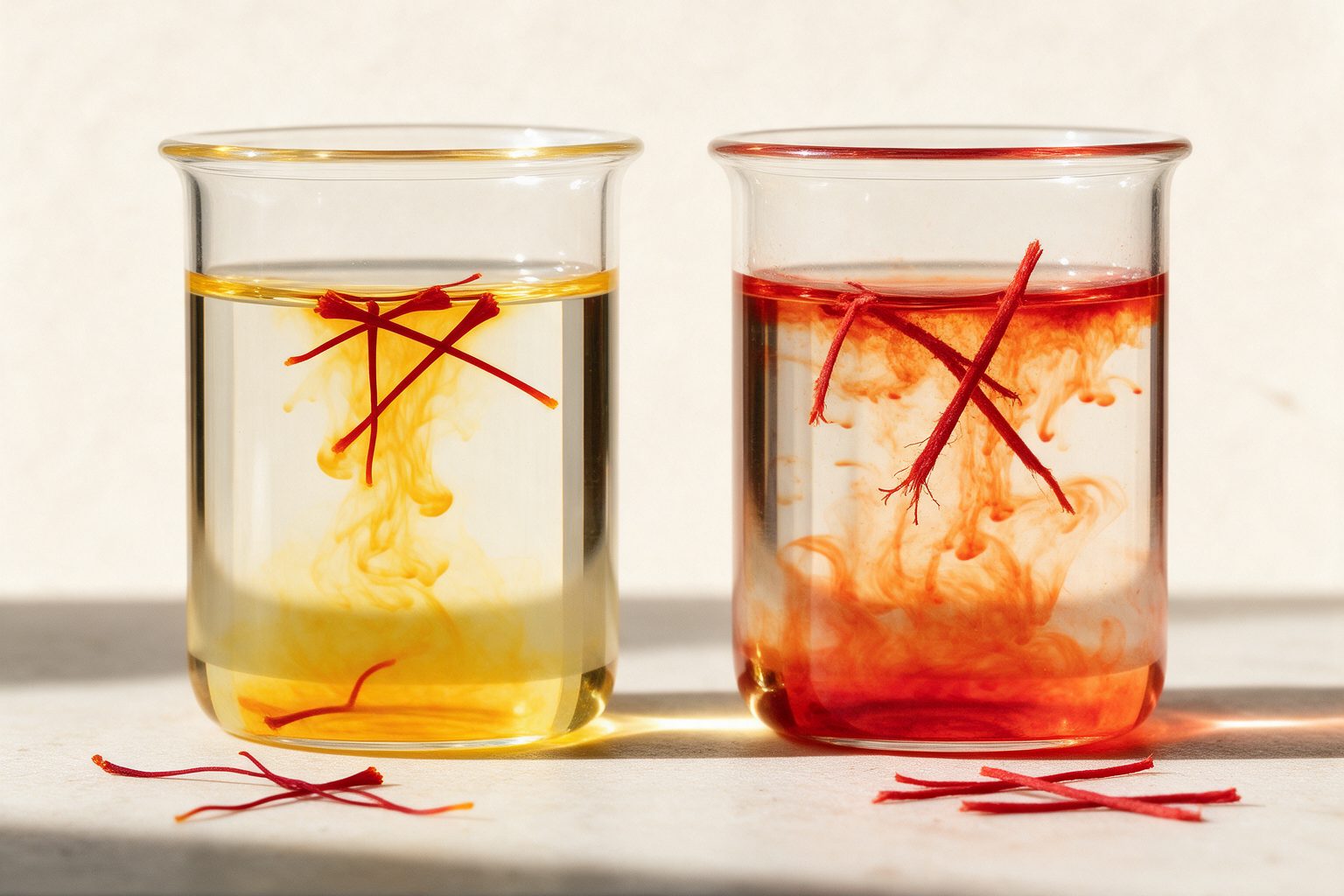
Do the water test and you’ll notice something else, and it’s the single most important detail in this whole story.
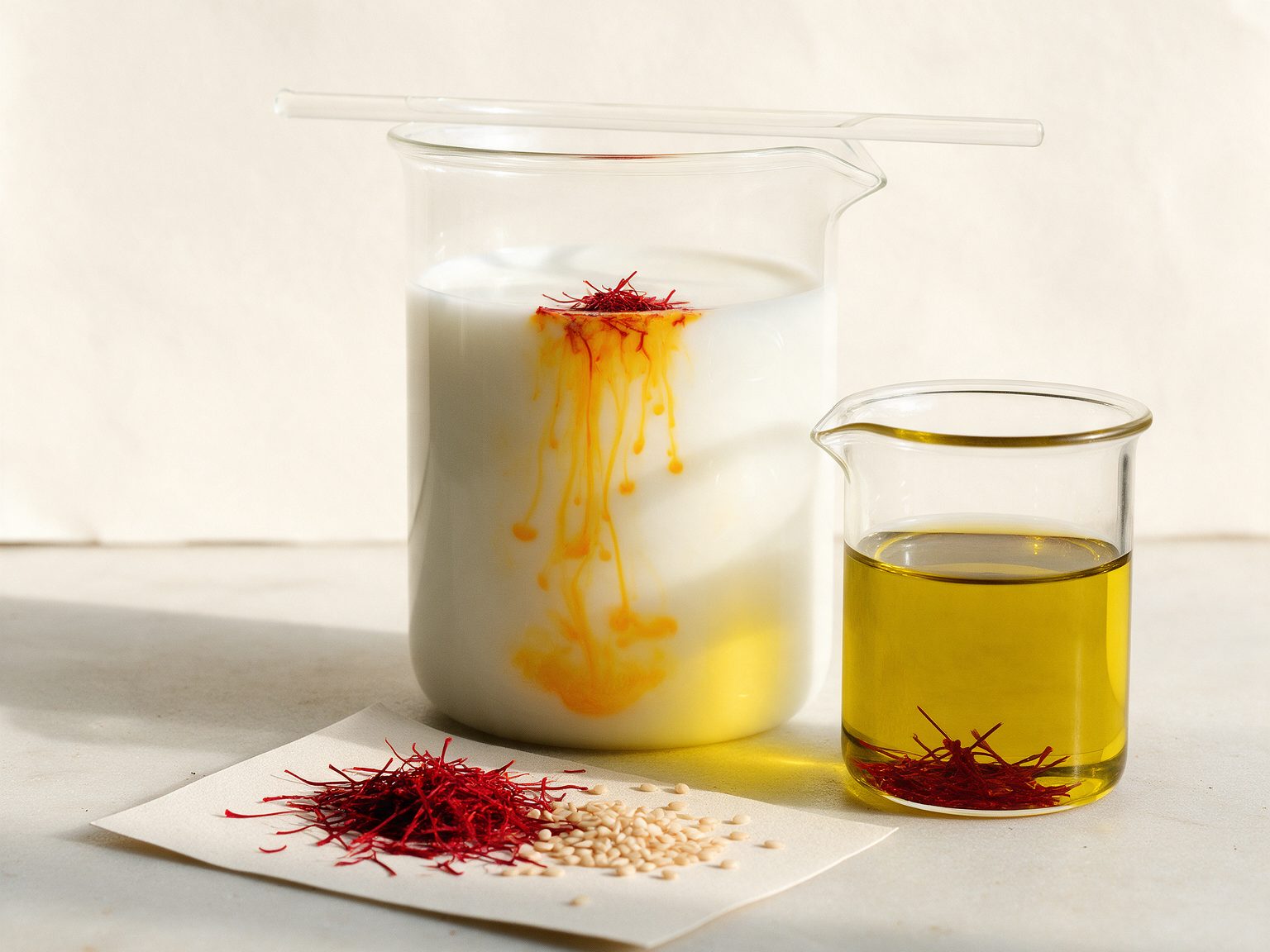
Saffron’s signature compound, crocin, dissolves in water, not oil. That’s why saffron colors water and milk so easily, and why a few threads dropped into a bottle of plain oil can look beautiful but give up surprisingly little of their gold.
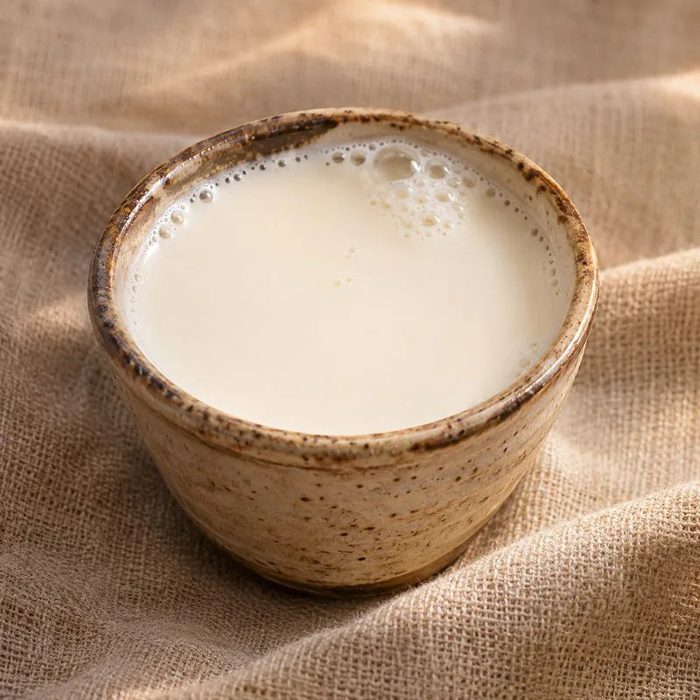
The old Kumkumadi makers worked around this centuries before anyone had a word for “crocin.” Instead of dropping saffron straight into oil, the classical method steeps saffron in milk and slowly cooks it down with the oil and herbs. The milk carries the water-loving gold, and the oil carries everything into the skin.
| Typical “saffron” product | Traditional milk-steeped method | |
|---|---|---|
| How saffron goes in | Extract, fragrance, or threads added to oil | Threads steeped in milk, then cooked into the oil |
| The crocin problem | Water-soluble gold struggles to move into oil | Milk draws the gold out, so it can carry into the formula |
| Time to make | Minutes | Slow, small-batch steeping |
| What you’re paying for | The word “saffron” | Saffron prepared the way the ritual was designed |
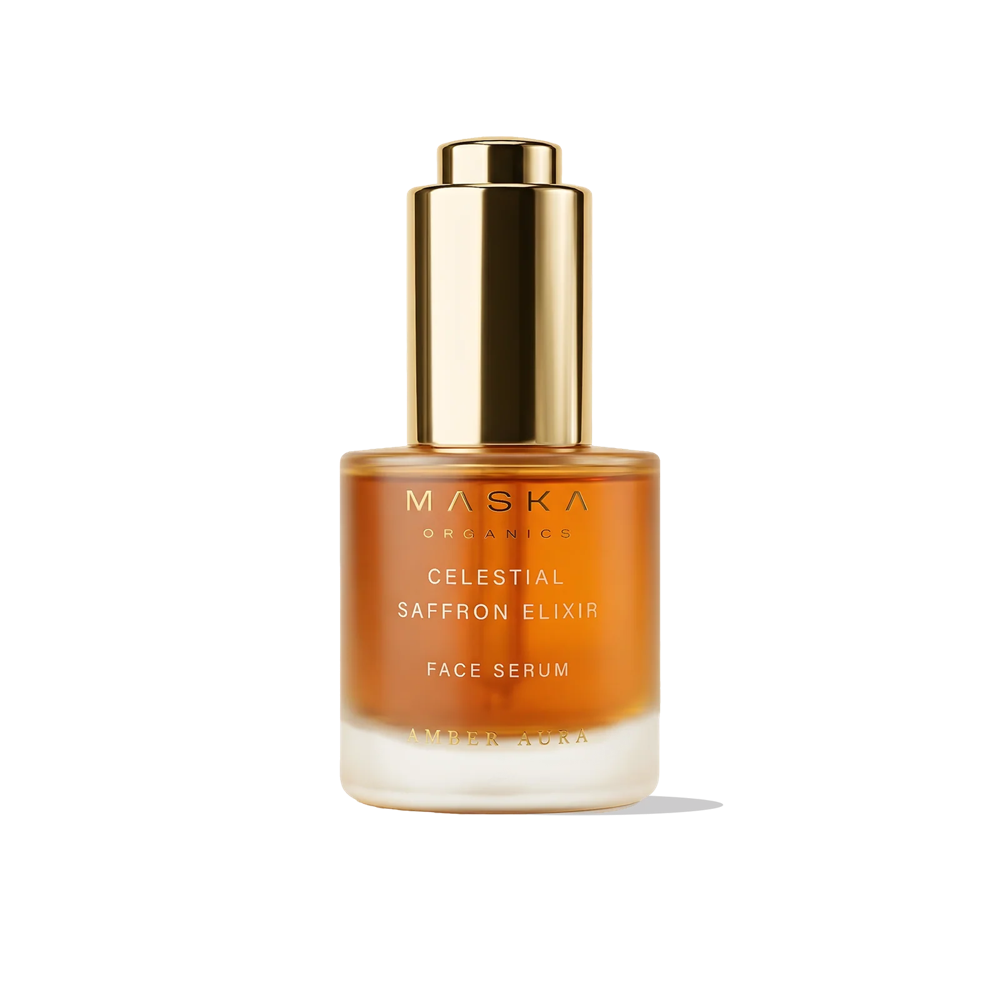
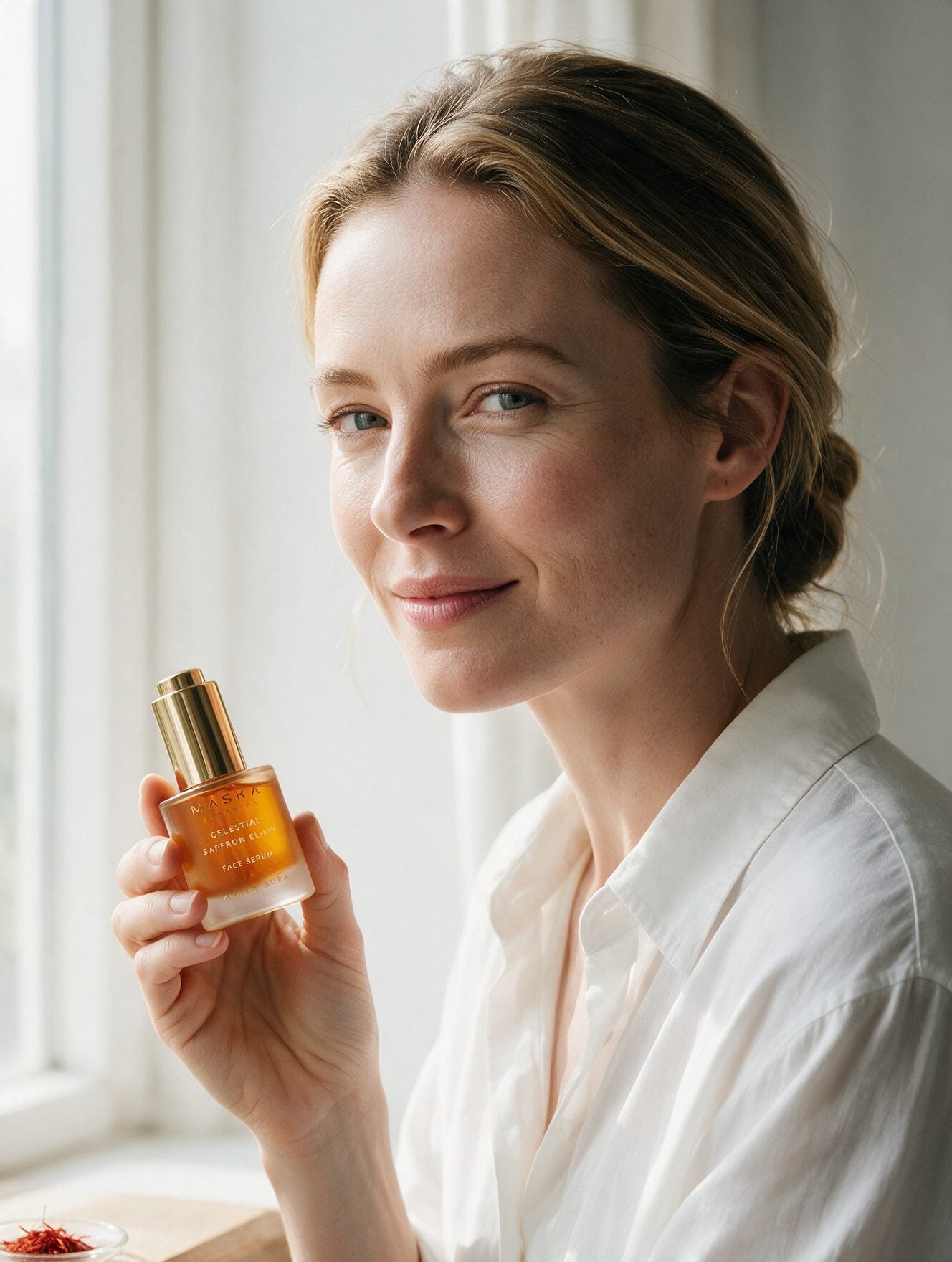
While researching this piece, we kept coming back to one small-batch brand that actually follows the classical method: Maska Organics, and their Celestial Saffron Elixir.
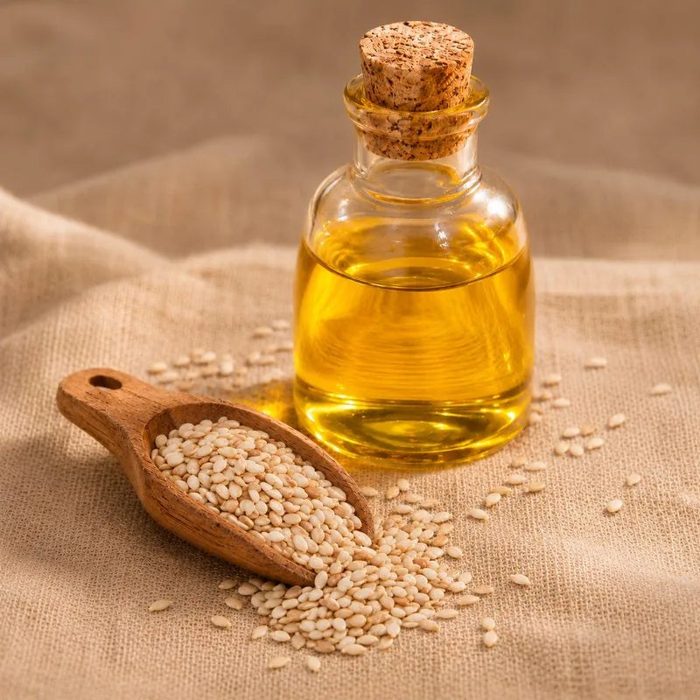
It’s a Kumkumadi-inspired face serum made the traditional way. The saffron is steeped in milk, then slowly worked into a base of sesame seed oil, the classic Ayurvedic carrier oil, along with gentle botanicals like licorice, red sandalwood, lotus and manjistha.
It isn’t cheap, and it shouldn’t be. You’re paying for real saffron, prepared slowly. But you only use two or three drops, so a single bottle goes a long way.
Maska asked 50 women to use the serum nightly for four weeks and report what they saw. The most common words? Brighter. More even. Softer. The same things saffron has been prized for all along.
4-week consumer perception survey, n=50 women, nightly use. Self-reported. Individual results may vary.
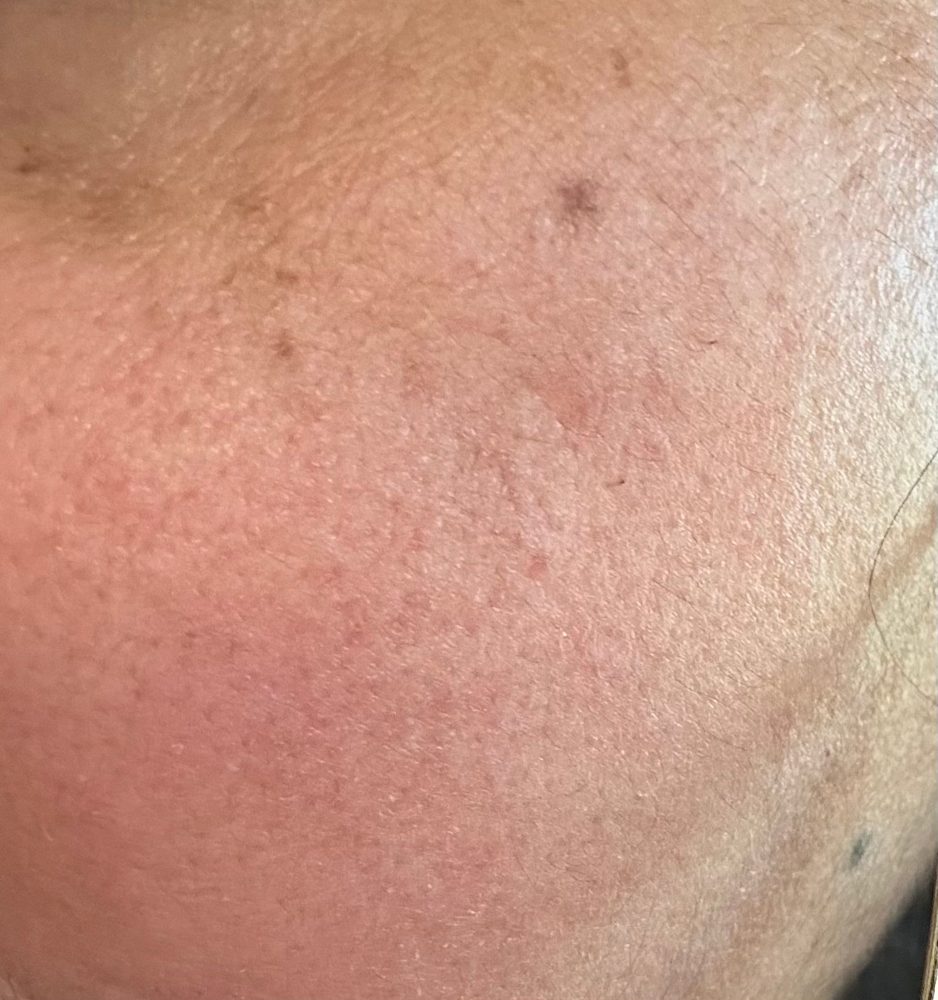

Real customer photos from maskaorganics.com. Individual results may vary.
I absolutely love it! My skin has really been enjoying it, and I’m especially in love with the scent.
That last part about the scent? That’s safranal, saffron’s natural aroma compound. The serum has no synthetic fragrance, so what you smell is the saffron itself.
After cleansing, warm 2–3 drops between your fingertips and press them into your face, neck and décolleté. Use it alone or under moisturizer, morning or night. Evening use is when most people notice the biggest difference. Always wear SPF during the day.
It’s a lightweight serum oil designed to sink in without a heavy film. A few drops is all you need.
It’s tested on sensitive skin and free of synthetic fragrance, parabens, sulfates and silicones. Because it’s made with real botanicals, patch test first on your jawline or inner arm.
Yes. It slots in after cleansing and any water-based serums, before moisturizer. Many people simply let it replace a step.
Each flower gives only three threads, picked by hand during a short autumn harvest, and approximately 75,000 flowers make a single pound of threads. Add slow, small-batch steeping, and the cost reflects the ingredient. If a “saffron” product is very cheap, it’s worth asking how much saffron is really in it.
Four weeks of the ingredient beauty rituals have treasured for centuries, prepared the way it was meant to be.



Three threads per flower. A two-week harvest. Picked at dawn, by hand. Some ingredients are worth the trouble, as long as someone actually takes it.
P.S. Next time you see “saffron” on a skincare label, ask two questions: Is it real? And was it prepared so skin can actually use it? Celestial Saffron Elixir answers both, and it’s 30% off right now. See it here.